
November 6, 2026
From sample cutting to guiding a growing converter, Mike Schaefer brings his blue-collar pedigree and staunch leadership to the AICC chairman role
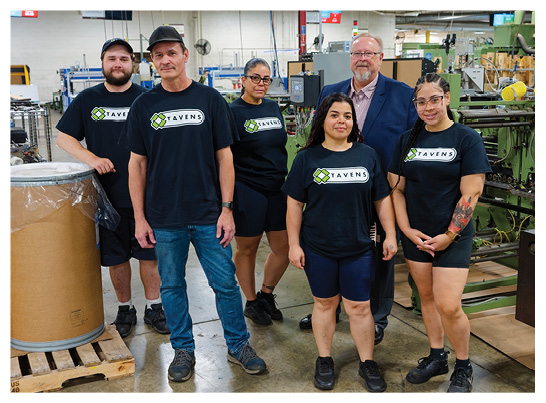
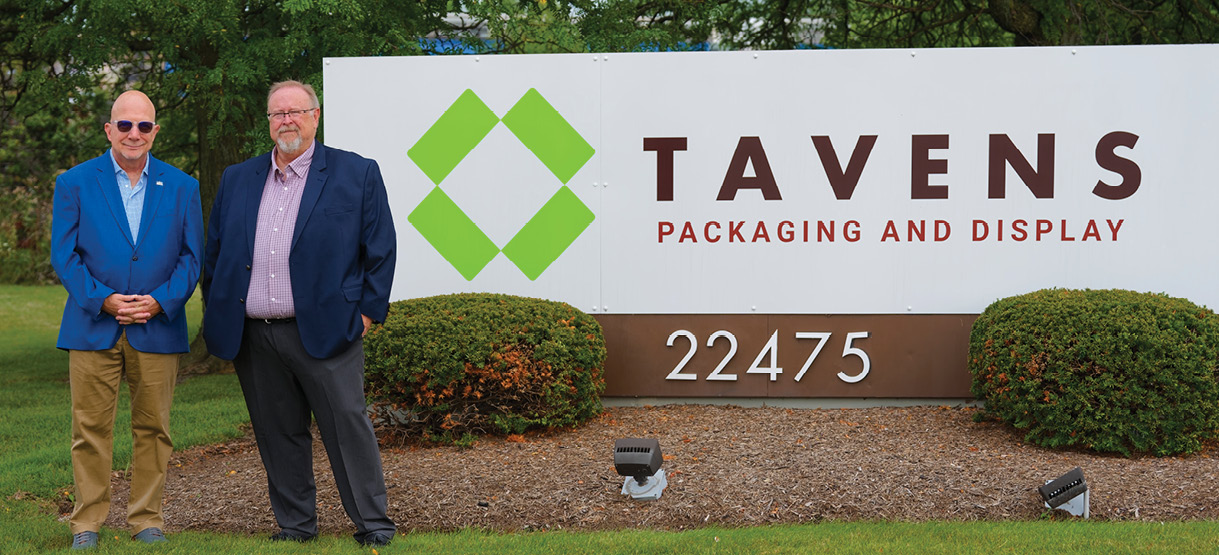
Mike Schaefer, president of Tavens Packaging and Display, jokes that, unless you’re a family member, nobody gets into the boxmaking business on purpose.
That was certainly true of his own experience. After high school, Schaefer imagined a career working on cars. When that dream dimmed, a tip from a friend led to his first job with a corrugated company. From there, his own desire to excel, coupled with the encouragement of industry friends and mentors, brought him to where he is today, leading a growing converter—and poised to become AICC’s 2027 chairman.
While chance may have played a role in drawing him into boxmaking, Schaefer is quick to add that “once you get into this business, it’s pretty hard to leave it. The opportunities in this industry are endless.”
From Cars to Corrugated
“Opportunities” weren’t necessarily beating down the door when Schaefer was growing up.
“I was born in the late ’60s in a suburb of Denver, Colorado, grew up blue-collar,” Schaefer says.
His father was a union sheet-metal worker who installed commercial HVAC systems. His mother was a stay-at-home mom raising Mike, an older sister, and a younger brother. “We were your typical lower-middle-class suburban family.”
Despite getting good grades in high school, Schaefer didn’t feel suited for college. “The classroom just wore me out,” he recalls.
So after high school he attended the Denver Automotive and Diesel College to become a mechanic. “I’d always had a mechanical bent,” he says. “And I loved hot rods. In high school, I had a ’67 Chevelle with a big block engine in it. I thought working on cars like that might be a good way to make a living.”
The work proved grueling. Frustrated with “beating the heck out of myself every day for not much money,” Schaefer bought into a Mac Tool franchise, selling tools to mechanics. “Because it was a small business, I learned an awful lot about the art of sales, about people. And I also learned some of the harsh realities of business.”
In the meantime, he had married his high school sweetheart. It wasn’t to last. “By the time I was running the Mac Tool business, she decided I wasn’t so sweet and moved on!” Schaefer says. “I was 22 years old.”
The financial and emotional toll of the breakup led him to close his business. Suddenly he needed a job. “I had a buddy who was working as a designer at a box plant. He told me they needed a sample cutter. So I went to work cutting samples out for a design department at Tharco in Denver.” The work fit his mechanical aptitude.
After Tharco came a job at Deline Box and Display’s plant in northern Colorado, where, Schaefer says, “I learned a ton. Typically, I get thrown into a position where I have to work over my head for a period of time while I acclimate and learn what I need to learn. That leads to proficiency, then excellence. And then I’m looking at what’s next for me to learn.”
After Deline was purchased by PCA in 1995, Schaefer decided that his “what’s next” would be in Ohio, where he found a position as a designer at Buckeye Container, part of the Buckeye Group.
“Moving to Ohio was a pretty big risk,” he says. “I left behind friends, my support network, a job I knew well. But I’ve learned that taking risks—for the sake of the potential rewards—is what has allowed me to grow. Buckeye Container allowed me to learn at a very rapid pace and grow into the next thing, and the next thing, and the next thing. I’m super grateful for the people there and how I was able to really grow in business knowledge and in corrugated.”
From design, Schaefer moved up through prepress, printing, sales, and sales management. He then moved to Indianapolis for a sales manager position at Cra-Wal Container, one of the Buckeye Group’s plants there.
Schaefer considers himself a “solution-based seller.” “I found out what problem customers wanted to solve, and because I had the experience in design and manufacturing, I could envision a solution that solved that problem.” His success caught the eye of a mutual vendor friend who tipped Schaefer to an opportunity at Tavens.
“By that point, I had learned enough to have some strong opinions about what a sheet plant or a box plant should look like, what it should do and be proficient at, how it should treat people, how it should grow. Owner Dick Ames was happy enough with that to offer me the job of president, which I accepted in 2012. I’ve been here now almost 15 years.”
The Tavens Mission
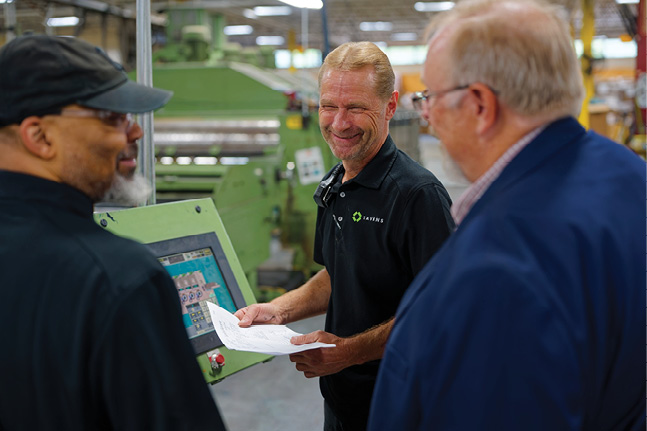
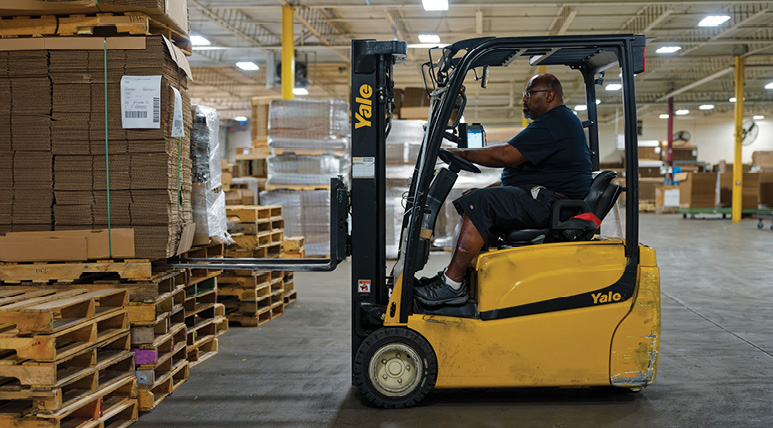
Tavens is a chain of sheet plants in northeast Ohio that has been in business since 1956. Schaefer was hired to help bring about the company’s transition to the next stage of its growth. “Tavens was never a lifestyle business, exactly,” Schaefer recalls, “but at that time business ebbed and flowed with what came in the door. My challenge was to help the company become more dynamic—what we like to call ‘a magnificent little company’—with more professional systems, more predictable results, a business people can count on as a genuine solutions provider.”
As Schaefer told Board Converting News in 2013, that meant looking for higher-margin, higher-value business. “This is our vision for the future and how we will continue to grow the company. We’ve got the most diversified customer base [of] any company I’ve ever worked for. The key is giving our customers what they want and giving it to them without fail. This is where our success will come.”
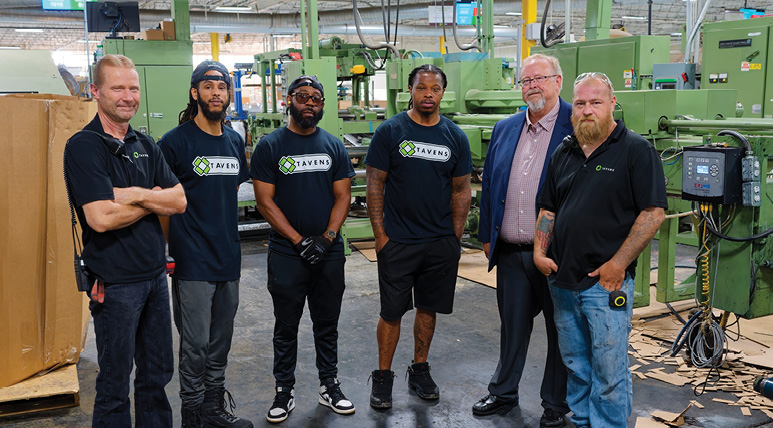
And it has come. Tavens has grown through strategic acquisitions—purchasing corrugated packager Corpad, as well as protective-foam companies Sash Foam and Luxaire Foamworks, which were combined into Sash Foamworks. As a result, Tavens now employs nearly 150 people, spread throughout three Ohio facilities: in Cleveland, Mansfield, and Ontario.
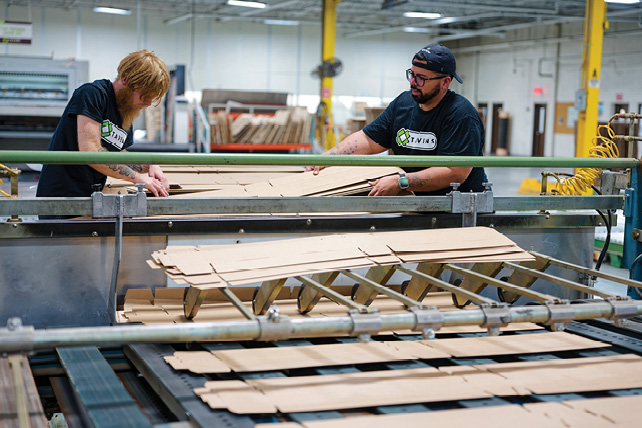
“We’re continuing to actively look at acquiring like-minded sheet plants,” Schaefer adds, “independently owned plants that would easily fold into our ‘magnificent little company’ mindset. We love the idea of having a bigger chain of plants, offering autonomy for them to still be who they are. We like to think we preserve that independent mindset in all of our acquisitions.”
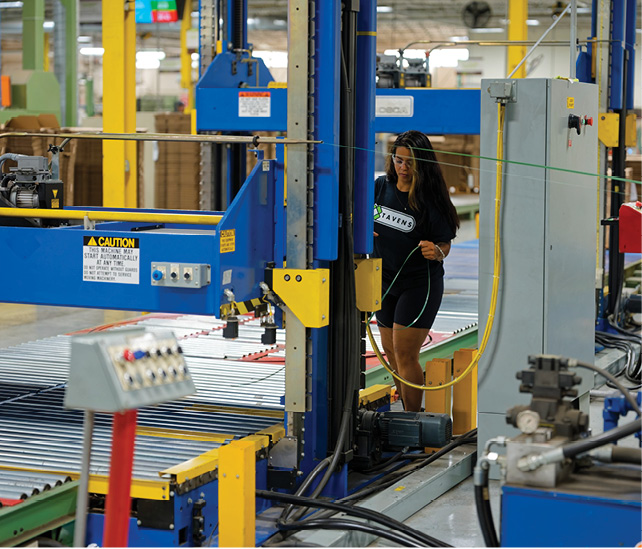
With those acquisitions have come valuable lessons. “I learned that pulling two companies together is more than two times the effort of running two companies! But even though that challenge was bigger than we anticipated, it has allowed us to significantly expand the sales master service agreement geographically, opening up the southern part of the state and reaching into other states as well. More importantly, it’s expanded our offerings and our ability to service a wider variety of accounts.” As an example, Schaefer points to one plant built around faster machines and a plant layout designed for volume throughput, while another plant is set up for greater flexibility, including small-quantity orders, hand labor—“the really fussy stuff,” as he puts it.
“Combine that flexibility with the ability to do cushion packaging with foam fabrication and the whole assembly that comes along with it—whether you’re filling Pelican cases or building foam-filled Gaylords for giant truck parts, which we do a bit of—and your business opportunities really open up. There’s almost nothing we can’t do.”
That sentence sums up Schaefer’s enthusiasm for the industry, an enthusiasm that led him to AICC and its focus on the independents through professional development and networking.
Empowering People
Schaefer has always aligned himself with independents, which made AICC a good fit. He has gone on to host a number of conference panels, then became a member of an AICC CEO group, which sparked his interest in joining the AICC Board.
More than just programs or educational offerings, AICC has provided Schaefer the opportunity to forge strong relationships, which in turn build business.
“I think all businesses are about people,” Schaefer said on AICC’s Breaking Down Boxes podcast when he was introducing himself as a new host of the show. “Finding different ways to relate to them, whether it’s one-on-one or in a group, is our job as leaders. But it’s also the most fun part of what I get to do. There are a lot of really boring things we have to accomplish as business leaders. People are the bright spot.”
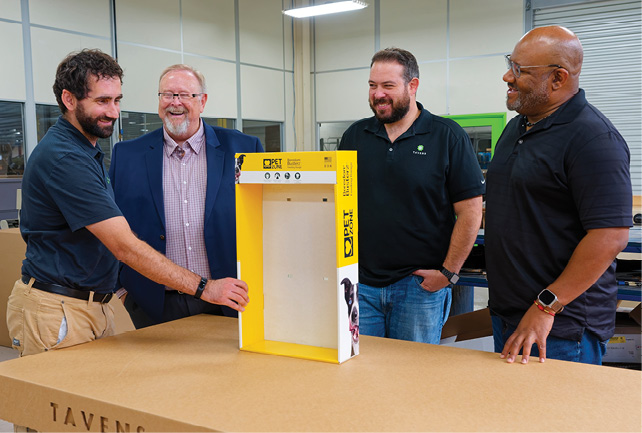
At the same time, Schaefer acknowledges that people need guidance and instruction if they’re going to shine their brightest. “The biggest challenge we face today,” he asserts, “is building the leaders who can teach the work, hold the standard, and make boxmaking feel like a real trade again.”
Schaefer is hoping to help address that challenge in his year as AICC chair. “One of my themes for this next year is raising the bar, training your leaders to be better,” he says. “Today’s labor pool is different than it once was. Among facilities workers, plant workers, it is the lowest-trust labor pool I think we’ve seen in my lifetime. So it takes a whole different approach to get them to believe in our mission and what we’re doing. That has to come from the people they report to—the frontline supervisors, the people on the floor who are responsible down the line. But that frontline leadership also needs a lot of help in learning, training, and coaching, so they can understand the psychology of what they’re up against and how to help these folks truly invest in our mission.”
When everything comes together and everyone is operating at a high level, the whole culture of a plant changes, Schaefer believes. “That’s what we’re trying to build. And AICC is the right platform to push that across the whole independent sector.”
Looking ahead at how that sector might evolve over the next five years or so, Schaefer believes consolidation will continue to shape the industry. He’s less certain about how younger independents might fare. “In the past, you could buy a press, hang a shingle, and start your own independent business,” he says. “Today, the barrier to entry is so great financially that we don’t see a lot of small-business startups growing into the sheet plants of old in the same way. So I’m not sure what the independent world looks like in five or 10 years. But I do think that as the integrateds evolve, there’s going to continue to be a gap in the market that independents can fill.”
As technologies also continue to develop, Schaefer is hopeful about their industry potential. “I believe technology—particularly AI—is going to allow companies like ours to automate some processes that maybe we’re spending too much time toiling over right now. I know some workers are concerned about what AI means for their jobs, but I don’t necessarily think it’s going to reduce head count; we’ll just have greater flexibility in how and where we make use of employees’ strengths.”
Going Full Circle
When it’s time for Schaefer to step back and take time to relax, hot rods continue to occupy a place in his heart—and, often, in various rooms of his house as well. “I have a couple of projects that I can drive now, along with five or six that are in various stages of being in pieces and taking up a lot of room,” he confesses. “Fortunately, my wife, Melissa, is patient with me!”
The appeal of the work goes beyond just having a hot-looking vehicle that runs. “Unlike almost everything I do professionally, when you’re working on a car, there’s a beginning, a middle, and an end. You know when you’re done. In my business, you never know when you’re done. Sometimes, you’re not even sure if you’ve won or lost. Working on cars allows me to center my brain a bit.”
Mike and Melissa are self-described homebodies, working on their property and spending time with their grandsons, Michael and Mason, the latter of whom lives with them about half of the time. “We also have had a succession of bulldogs that we love,” Schaefer adds.
Looking back over his serendipitous career so far, Schaefer says, “I’m just a dude that used to fix cars for a living. By applying myself and learning everything I could when the opportunities came up, I was able to advance. That’s how it’s worked for my whole career. And now I’m advancing all the way into the AICC chair, which is pretty exciting.”
For Schaefer, it’s a path that exemplifies everything positive about the industry. “Boxmaking rewards those willing to master the work,” he says.

Robert Bittner is a Michigan-based freelance journalist and frequent BoxScore contributor.
