
May 11, 2026
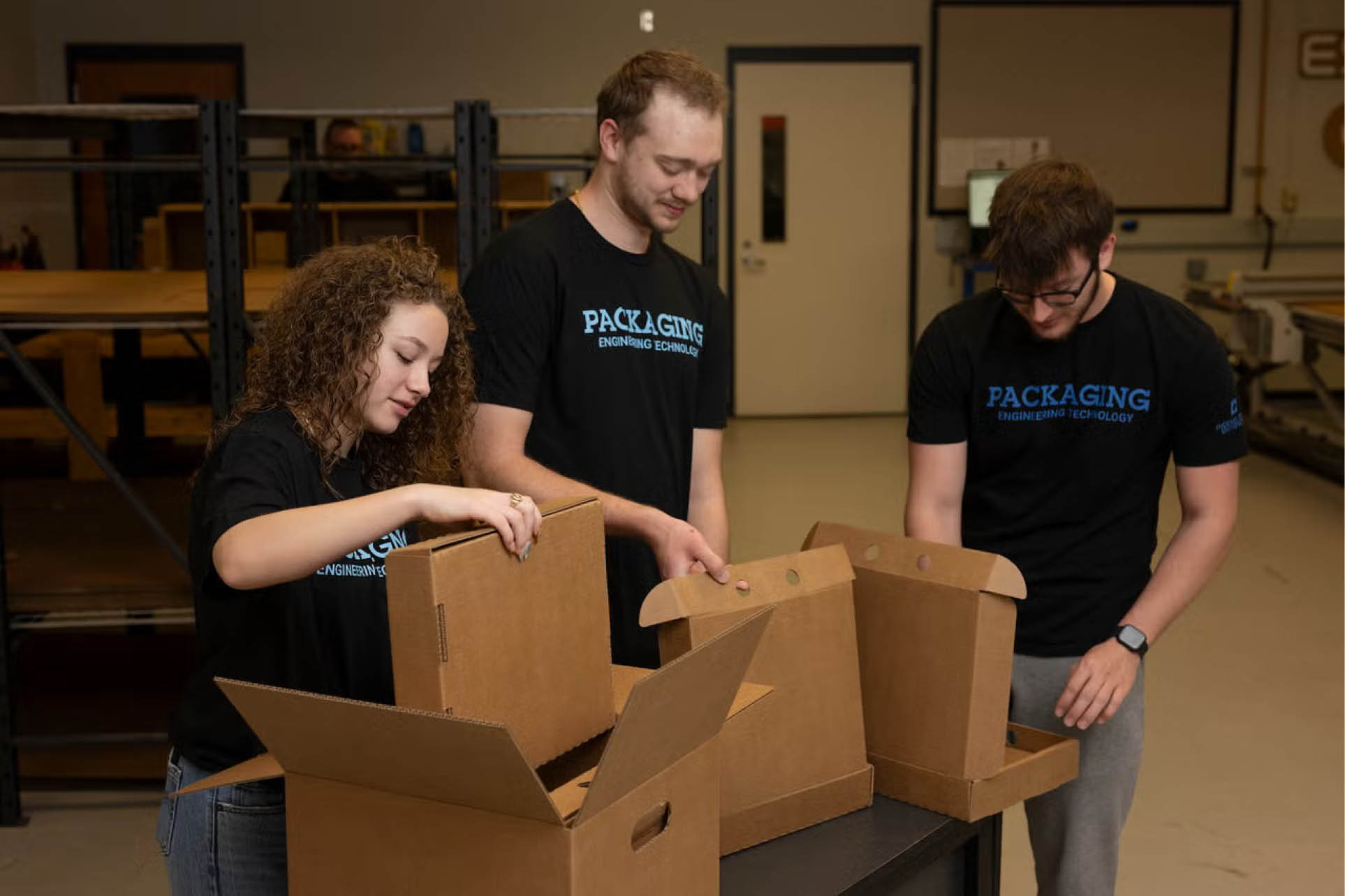
Indiana State University’s packaging engineering technology program has trained packaging professionals since 1975. The program has strong momentum, with new offerings designed to support both undergraduate students and the current workforce. Indiana State offers the first and only packaging bachelor’s program delivered both online and on campus, giving students a flexible way to earn a degree while they work. The bachelor’s program is accredited by the Engineering Technology Accreditation Commission of ABET.
The program’s student support structure is expanding. This academic year, Indiana State launched a Packaging Student Worker program and hired 12 students from packaging and related fields. The program also has three packaging student ambassadors who represent the program and support day-to-day laboratory operations. With support from the International Corrugated Packaging Foundation (ICPF), Indiana State plans to grow the student worker model to as many as 30 positions beginning this fall.
Indiana State is also expanding options for working professionals and continuing learners. A packaging engineering technology certificate is approved for this fall. In addition, noncredit courses and workforce certificates are planned to launch in 2027, or earlier, through the newly established SycamorePro+ education platform. These offerings are intended to help current employees build skills quickly, while also creating clear pathways into the degree program.
We teach packaging as an engineering system. Students learn how materials, design, manufacturing, and distribution work together. They learn to design a package, prove it performs, and explain how it can be made and shipped reliably. Courses build technical skills, structured problem-solving, and project management. Students practice making clear decisions with real constraints, such as cost, speed, and supply chain limits.
Students are expected to show their work beyond the classroom. Indiana State regularly competes in the Paperboard Packaging Alliance (PPA) and AICC student design competitions. These projects require students to document assumptions, justify design choices, and communicate results to a professional audience, which is exactly what industry expects.
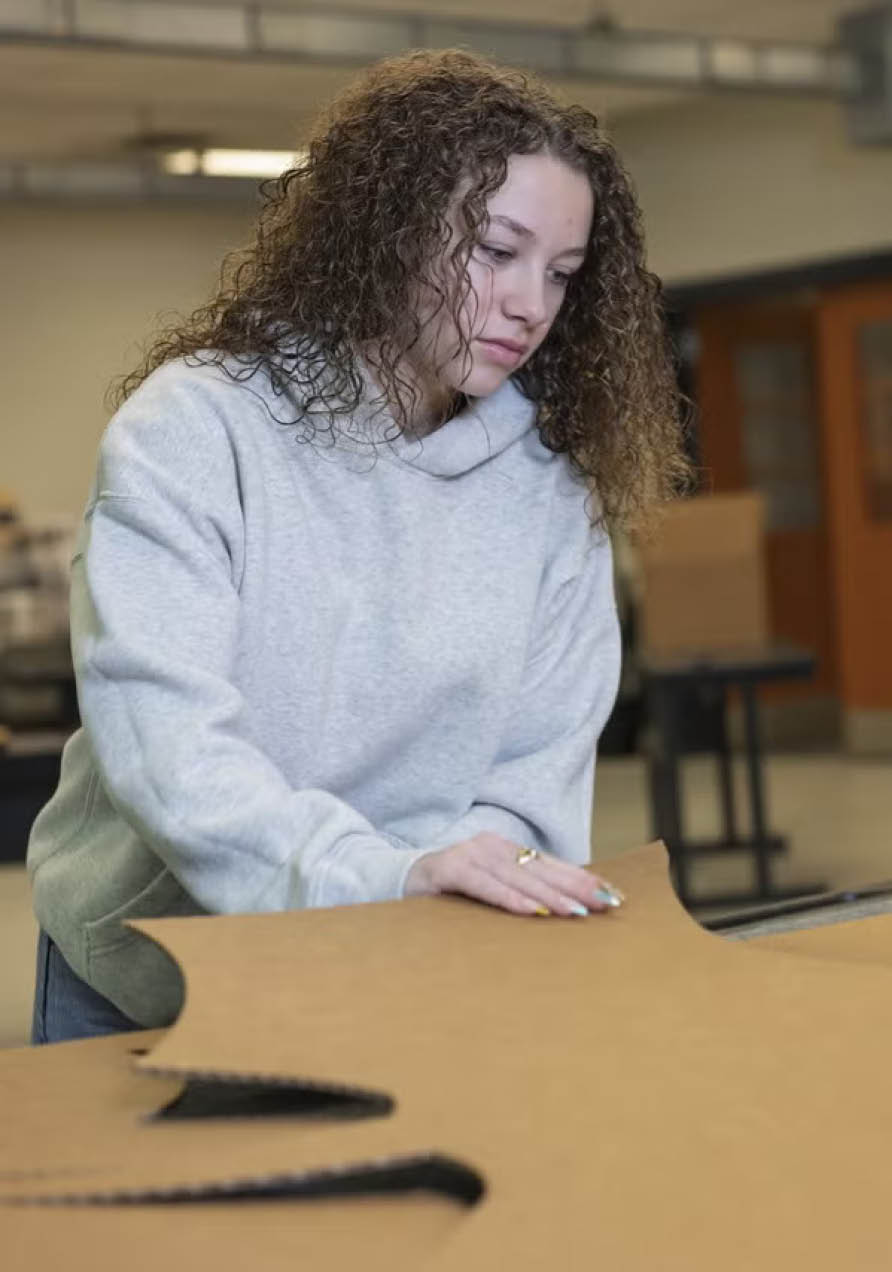
Hands-on testing is a major part of the program. Indiana State operates an International Safe Transit Association member testing laboratory, with equipment for random and fixed-displacement vibration, drop testing, and compression testing. Students also run common materials tests, such as compression and tensile testing. They learn how test methods, sample preparation, and conditioning affect results, and they use data to choose materials to design reliable packaging systems.
Design and prototyping move quickly from screen to sample. Students learn industry tools used by converters and brands. Core software includes Esko ArtiosCAD and Esko visualization tools such as Studio and Store Visualizer, plus Arden Impact, Specright, Trayak COMPASS, TOPS Pro and MaxLoad Pro, AutoCAD, and Onshape. In the lab, Kongsberg precision cutting tables and metals prototyping and fabrication shop help students build samples, test fixtures, and make rapid design iterations.
Packaging decisions also affect the production floor, so students study how packages behave in real operations. In Indiana State’s automation laboratory, students work with a KUKA collaborative robot, Hoosier Feeder vibratory bowl tooling, FlexMove conveyors, PLC trainers, and robotics equipment. This helps students understand key steps such as feeding, conveying, packing, and inspection, and how package geometry and materials can help, or hurt, those processes.
Industry engagement is constant. The program works with organizations and partners such as ICPF, AICC, PMMI, the PPA, and the Institute of Packaging Professionals. Students also connect with companies including Arrow Packaging Solutions, H.B. Fuller, Rose-Hulman Ventures, Saturn Petcare, thyssenkrupp, Taghleef Industries, International Paper, and Welch Packaging. Internships are required,
and experiential learning is encouraged at every level, including early opportunities for first-year students.
Indiana State’s graduates move into roles as designers, engineers, and test professionals. Many enter the corrugated industry in design, converting, and manufacturing. Others work in medical device and pharmaceutical packaging, consumer packaged goods, defense manufacturing, packaging and materials testing, and manufacturing engineering. Across industries, the program emphasizes the same mindset: Design it, validate it, and make it manufacturable at scale.

Brian M. James is senior instructor at the Bailey College of Engineering and Technology at Indiana State University.
