
March 20, 2025
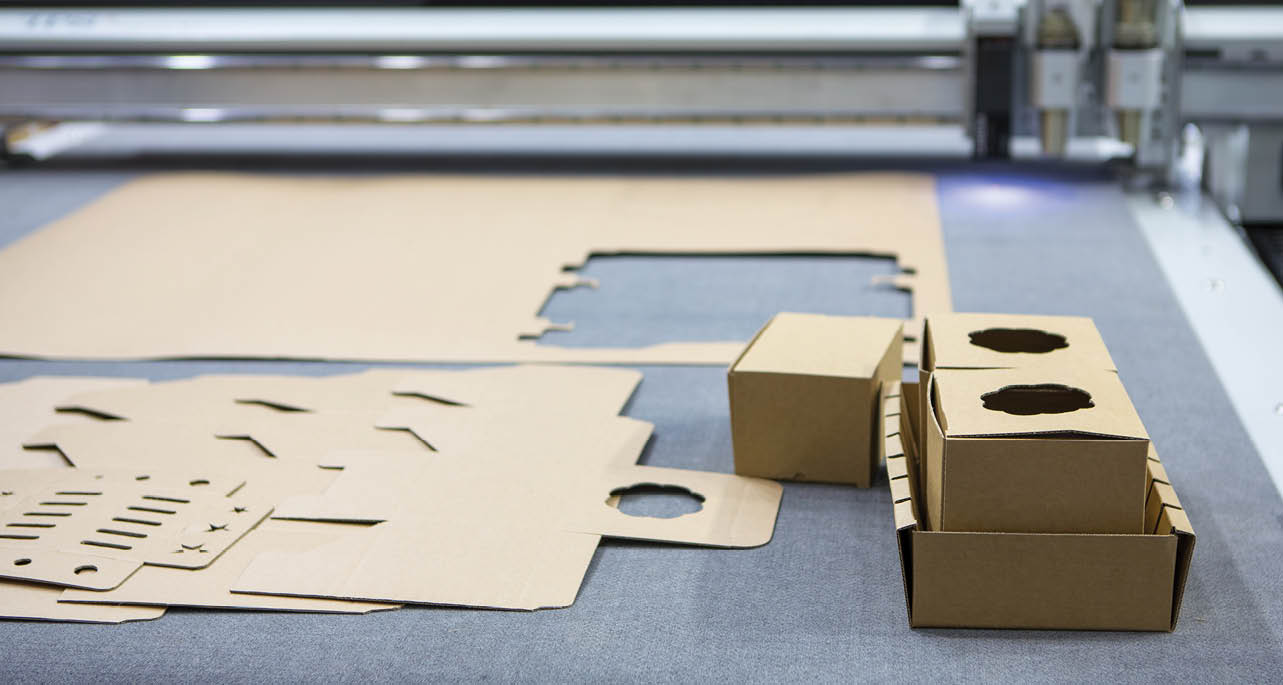
Die cutting is a cornerstone of package manufacturing, ensuring boxes are produced efficiently and precisely. From its origins in the 19th century to modern advancements, the process continues to evolve to meet the needs of an ever-changing market.
Origins of Die Cutting
Die cutting began in the mid-1800s as a solution for the shoe industry’s need for faster ways to cut leather. The first dies were metal tools with sharp edges that could press materials into specific shapes. Over time, the process became more refined and was adapted for various industries, including packaging, printing, and electronics.
Before die cutting entered the corrugated industry, boxes were made manually using hand tools. This approach was slow and offered little flexibility. As consumer demand grew, so did the need for efficient and customizable boxmaking methods. This led to the development of platen die cutting, where a flatbed machine presses a steel-rule die onto corrugated material to cut it into specific shapes. Today, this method is used for projects requiring precision and versatility.
Rise of Rotary Die Cutting
In the 1950s and 1960s, automation transformed the corrugated industry. Rotary die cutting emerged as a faster alternative to platen die cutting. This method uses a cylindrical die mounted on a rotating drum, cutting, scoring, or perforating materials as they pass through the machine. The continuous operation of rotary die cutters offers significantly higher production speeds, making them ideal for large-scale production runs.
Rotary die cutters also allow for intricate designs, combining speed and flexibility. This makes them a cost-effective solution for high-volume manufacturing while maintaining the precision needed for complex shapes.
Advances in Rotary Die Cutting
Though the core functionality of rotary die cutters has remained the same, recent innovations have drastically improved their performance. Structural enhancements such as reinforced frames and advanced cutting drums have increased durability and reduced maintenance needs, resulting in consistent, high-
quality cuts.
Additionally, urethane anvil blankets and automatic anvil trimmers have extended the lifespan of cutting surfaces while maintaining precision. The Industrial Internet of Things has further revolutionized rotary die cutting by enabling real-time monitoring of machine performance. This connectivity allows operators to analyze data on production rates, energy usage, and wear, facilitating predictive maintenance and minimizing downtime.
Driving the Future
From its humble beginnings in the 19th century to the sophisticated technologies of today, die cutting has undergone remarkable transformation. Innovations such as those we’re seeing at many AICC member companies are setting new standards in efficiency and durability, ensuring the corrugated industry can meet the demands of modern markets. As advancements continue, die cutting remains a vital tool for creating high-quality, customizable packaging solutions that drive the future of manufacturing.

Justin Delcher is a marketing specialist at SUN Automation Group.
