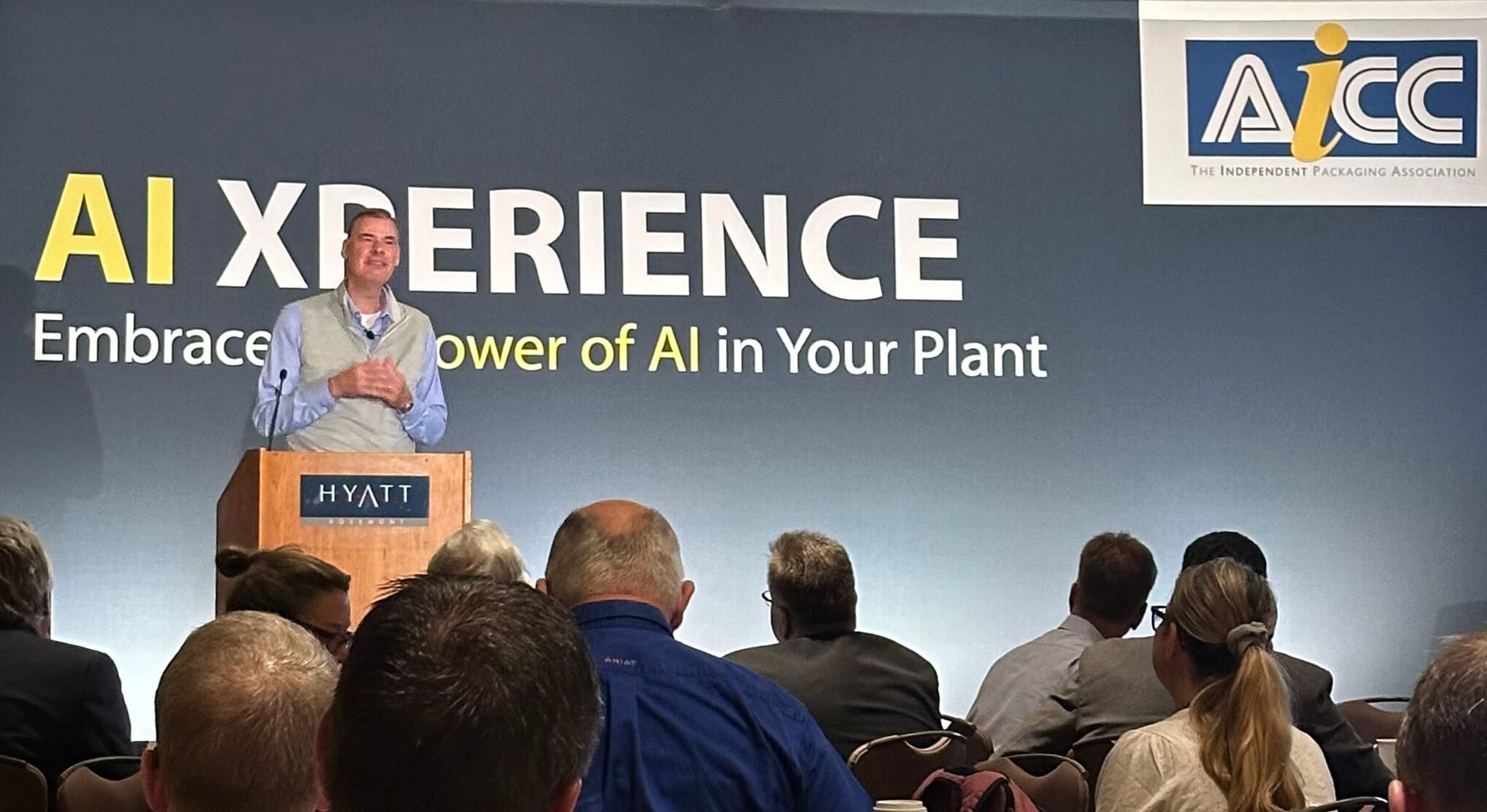
In the spirit of the Xperience, this article was written with artificial intelligence (AI) and then adjusted and augmented by humans. The portions in bold are additions made by AICC staff.Jeff DeVries of XDS Holding gives the presentation titled “The Elephant in the Room, Industry 4.0/5.0” during the AICC AI Xperience in May in Chicago. (Photos courtesy of AICC.)
The recently concluded AI Xperience, held from May 14–16, 2024, in Chicago, was a landmark event for AICC members in the manufacturing and supply chain sectors. Over three days, industry leaders, innovators, and practitioners gathered to explore the myriad ways AI is transforming their businesses. This comprehensive article aims to provide you with a vivid sense of the conference’s atmosphere, discussions, and groundbreaking insights, encapsulating the event’s essence.
Over 100 people came together to walk into the future. Many were first-time attendees and part of the technical side of box plants. Overall, the audience was curious about the possibilities that AI can bring. The event began with the Chicago Technical Association of the Pulp and Paper Industry tabletop followed by a joint reception with the arriving AI Xperience attendees.
Innovations and Insights in AI
The AI Xperience kicked off with an in-depth discussion on the role of AI in enhancing box manufacturing and supply chain processes. From predictive maintenance to advanced data analytics, speakers from diverse sectors shared how AI technologies are becoming integral to operational success.
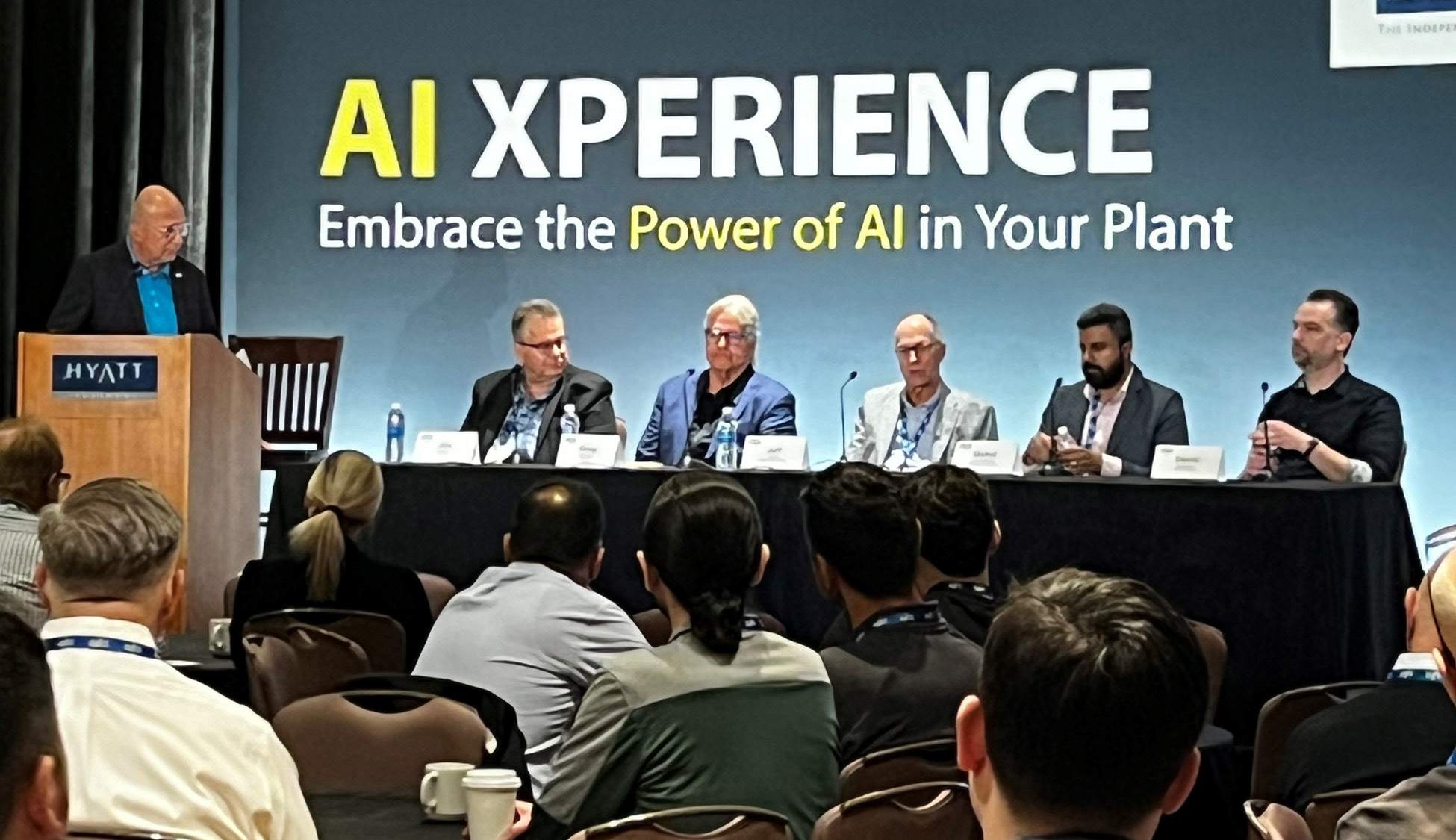
The session answered questions about why AI is of interest to boxmakers and suppliers, barriers to entry, and data generation and ownership. These insights were shared by AICC’s Innovation & Technology subcommittee—Jeff Putt, DeLine Box & Display; Greg Tucker, Bay Cities; Jim Hawton, Bay Cities; Gokul Gopakumar,
SUN Automation Group; and David Wiens, BPS AI Software—during a panel moderated by AICC President Mike D’Angelo.Tucker also explained how they data warehouse to tag and organize the data before putting it into a data lake. This enhances the data’s usability, discoverability, and reliability. This marks the initial step for a practical AI implementation for immediate decision-making.
Key topics such as cybersecurity, data management, and system integration dominated the discussions, with a strong emphasis on the strategic implementation of AI to minimize unplanned downtime and enhance safety measures.
Hawton discussed cybersecurity and how to keep your data safe. Since AI demands huge amounts of data to be shared, this was a necessary component of the Xperience. Gopakumar presented the application of AI for preventive maintenance. This is an early opportunity for AI as so many new machines are equipped with sensors that can relate information. Older installed machines can also have sensors retrofitted to them.
The concept of digital twins was a highlight, touted as a revolutionary tool for optimizing operations and enabling more informed decision-making processes. A particularly engaging session involved the use of digital twins to simulate manufacturing processes, providing a dynamic visual understanding of how AI can predict and optimize production workflows.
Mohamed Azzouz of Royal Containers shared the concept of digital twins and then demonstrated digital twins live on the Xperience stage by bringing in a digitized version of a piece of equipment at Royal Containers and placing it on the stage, at scale, for all to see.
Key Takeaways From the Conference
Investment and Growth in AI: AI continues to see significant investment, showcasing its broadening scope beyond traditional industries.
Integration Challenges: Effective AI solutions hinge on overcoming data management challenges, a crucial step for successful AI integration across operations.
Impact on Design Processes: In graphic and structural design, AI is proving to be a transformative force, offering new efficiencies and capabilities.
Advancements in Maintenance and Safety: Predictive maintenance emerged as a prime area where AI can significantly influence manufacturing, promoting better safety protocols and reducing operational interruptions.
Data Security: As AI systems become more embedded in core operations, protecting data integrity and securing systems against breaches remain top priorities.
Based on the presentations made and the two panels’ answers to questions, data availability, access, and security are major takeaways from the Xperience. Also, AI-based systems can immediately impact members’ operations in terms of safety, maintenance, and supply chain management.
The discussions underscored the necessity of cross-functional teams
and continuous education to adapt to rapidly advancing technologies, emphasizing that the journey toward AI integration is collaborative and evolutionary.
Decisions and Action Items
The conference concluded with actionable decisions aimed at fostering a more integrated and efficient future:
A standardized system for data exchange will be developed, recognizing the need for a common language within AI applications.
AI’s potential in design processes will be further explored, particularly in predictive maintenance and operational safety.
These initiatives reflect a commitment to not only adapt to AI technology but to also lead in its thoughtful implementation.
Experiencing AI in Action
From real-time data analysis to AI-powered demonstrations, sessions provided attendees with hands-on experiences of AI tools. Participants could see the practical applications of theoretical concepts discussed in the various presentations.
Looking to the Future
The AI Xperience set a forward-looking agenda for the use of AI in manufacturing and supply chain management. It was not only about understanding current technologies but also about anticipating future developments. Discussions on the regulation of AI, ethical considerations, and the balance between human and machine intelligence provided a comprehensive overview of the strategic direction needed for future success.
Speed of AI development is another consideration. Changes in platforms and execution are occurring in weeks and months and will continue to do so. AICC members need to make sure they are engaging the correct team members to understand the evolutions taking place.
AICC President Mike D’Angelo with Terry Carman of StandFast Packaging Group.
Engagement and Networking
Beyond the sessions, the AI Xperience was a vibrant hub for networking, with industry professionals exchanging ideas, forming new collaborations, and sharing insights. The energy was palpable as attendees discussed potential projects and partnerships that could shape the future of their industries.
Conclusion
The AI Xperience was more than just a conference; it was a confluence of ideas and innovations that are set to redefine the industry. For those involved in manufacturing and supply chain management, the event offered not only a glimpse into the future of AI but also a road map for integrating these technologies into their operations. As we look ahead, the lessons and strategies gleaned from this event will undoubtedly influence industry practices, driving efficiency, innovation, and growth in an increasingly digital world.
The AI Xperience showed that AICC members are early adopters and thought leaders that are already laying the groundwork to take advantage of the evolutions that have arrived in AI and that will come. AICC will continue to develop educational programming regarding AI in order to keep members informed and engaged with the advantages the technology offers—and the challenges it can bring.AICC thanks sponsors eProductivity Software and Stambaugh Ness for their support of the Xperience.AICC’s Innovation and Technology Committee kicks off the conference with a conversation about “Why AI Is Important to Us and AICC.”