
May 11, 2026
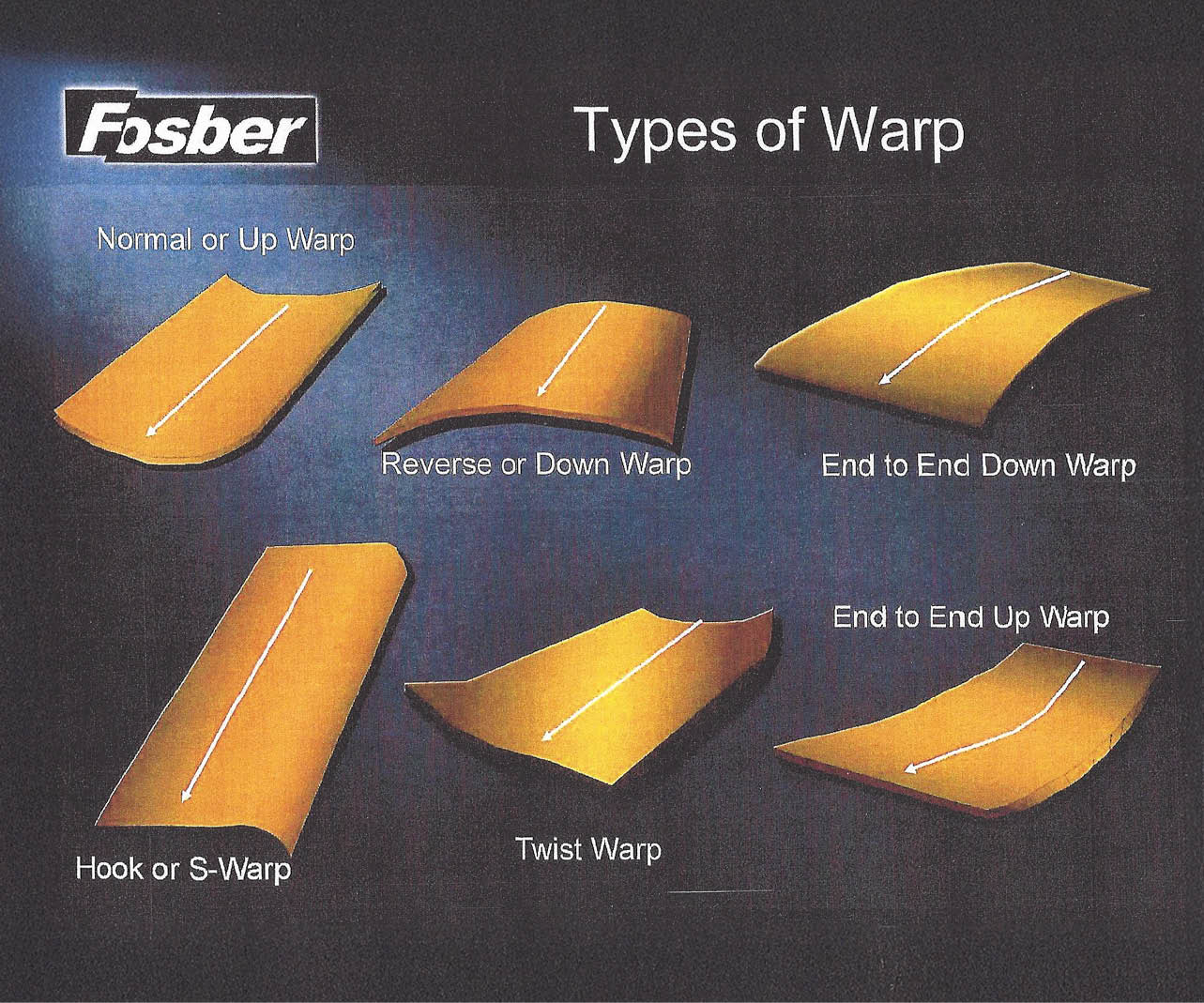
AICC just published an extensively searched and reviewed document from more than 20 years of AskRalph responses, other AICC brochures, presentations, internet posts, TAPPI and its corrugated board technical committee content, interviews with best-in-class corrugators and sheet feeders, corrugated manufacturers themselves, and digital press manufacturers. Not much has changed in combined corrugated board, except that digital presses cannot tolerate any warp greater than ⅛ inch per linear foot—they just need flat board.
So, we look obviously at the cause of warp and where in the manufacturing processes this manifests. While the image at right illustrates the common types of warp, the most troubling one is end-to-end-up warp, which could possibly cause the sheet to make contact with one or more expensive print heads on the press.
Digital presses place fundamentally different demands on corrugated board than traditional flexographic or offset systems. Sheet delivery systems often rely on vacuum transport, bottom-feed delivery, and precise nip-point alignment before the first print station. Any variation in sheet flatness can lead to head strikes, image distortion, feeding errors, or press stoppages in digital presses. While flexos can be either top or bottom printers, digital presses are always top printers because they rely on gravity to deliver the ink drop to the sheet.
Unlike conventional presses, digital systems provide little opportunity to “force” a sheet through the machine. The result is that board that meets historical allowances may still be unsuitable for digital printing. In many cases, digital printers must reorient sheets, flip warp directions, or reject board entirely—increasing waste, cost, and frustration across the supply chain.
There are newer corrugators and laminating processes to produce flat board more consistently than conventional corrugator processes. There are hybrid systems like Asitrade, Quantum, Interpac, and the BHS NextGraphX. The first has been with us for a long time, laminating printed top sheets to a single-face web. Recently, there has been the introduction of wider and longer machines.
The Quantum process appears as a rather conventional corrugator process but has a revolutionary engineering design focused on converting fine flutes and very low substance containerboards. It’s different.
Interpac uses a cold corrugating process that is not dependent on steam and heat to control board moisture and cure the starch-based adhesives. With the initial installation in Canada, an additional 10 machines have been sold in North America. It’s a low-cost alternative to manufacture flat board.
The most recent announcement was a corrugator and digital printer all inline. This creation offers shorter lead times, significant cost savings, and reduced environmental impact. It is focused on replacing the litho-laminating step to high-quality graphics—amazing. Stay tuned for the white paper at NOW.AICCbox.org.

Ralph Young is the principal of Alternative Paper Solutions and is AICC’s technical advisor. Contact Ralph directly at askralph@AICCbox.org about technical issues that impact our industry.
