
August 30, 2024
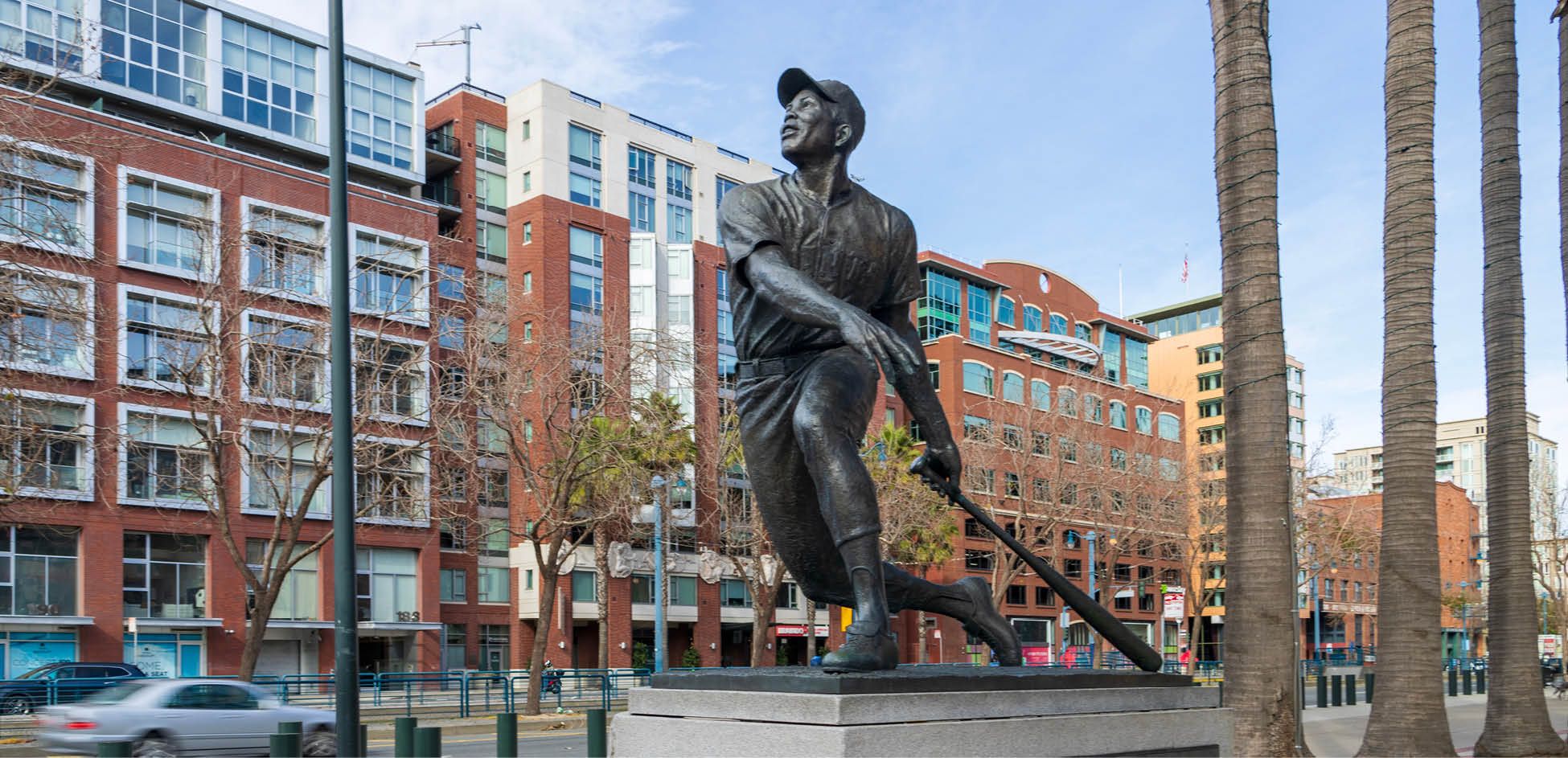
With the passing of Willie Mays this summer, I am seeing the lasting impact of the man’s actions and attitude. Epithets like hero and legendare fragile these days, when we find joy in erecting and then toppling pedestals. The building of a legacy is not possible for mortals when perfection is the standard. Consistency is the thing; hard-won recovery and recommitment after error or distraction are the stuff of legacy. I am confident to say that this man consistently exemplified tenacity, excellence, joy in effort, and gratitude. Personally, I bore witness to his influence for over six decades.
I am told that I attended games at Seals Stadium in San Francisco circa 1958. I do recall watching practice games between the 1962 New York Yankees and San Francisco Giants when the series was delayed by rain. From my left-field knothole in the fence, I watched Mays work. It was poetry in motion. Much later, I would learn some of the hardship he had endured leading up to that season, and it made his joy even more impressive. In countless games at Candlestick Park, he led his team by direction and example. He gave the impression that he was playing checkers so when opponents discovered he was playing chess, it was too late. In 1972, he went back to New York, where the Giants were originally based, to close out his career. I remember the first game in which Mays came to the plate in a Mets uniform; the standing ovation must have lasted five minutes.
After playing his final season in 1973, Mays returned to the Giants in various coaching roles. Countless players received guidance from him on baseball and less essential aspects of life. As an ambassador of sorts, he was a fixture at Giants games well into his 80s. He sat in the stands and readily engaged youth of all ages as we approached him to talk about the game and the memories we shared.
With his passing, just days before the celebration of Negro League history at Rickwood Field in Birmingham, Alabama, where his career began, his impact continues. While he had more mainstream name recognition than the other players celebrated that day, there were many whose exemplary lives and contribution in baseball have left the world better for their efforts. Accordingly, I am contemplating leadership legacy and what can be gleaned from this example of a well-lived life.
What I know so far is that perfection is not required. If that were the case, the obstacles and interruptions of life such as poverty, segregation, the draft, injury, or being traded to the Mets would have derailed him. For most of us, our own frailty and distraction knock us down. Legacy may require the tenacity to “fall down seven times, get up eight,” as the Japanese proverb says.
The second aspect that seems to be true of legacy building is distilled purpose. I think this purpose is less about what you do and more about how you do it. Mays deployed extraordinary discipline to hone his natural skills and “do” baseball better than anyone else. However, I would argue that this only gave him fertile soil in which to grow a legacy. The way he lived his daily life is what grew his legacy, long after he could hit a curveball. I don’t know if he had a mission statement. I just know that he showed up. He was approachable, gracious, and helpful, even on days when arrogant players failed to listen—even when sticky children wanted to sit in his lap and awestruck fans wanted to share just one more moment. He consistently behaved as if he was glad you stopped by. He was not holding court; he listened and even asked permission before giving advice.
Leaving a legacy is about creating a positive, lasting influence that benefits others even when you are no longer present. Perhaps it would be a good start, then, to take some time to consider the lasting benefit we want to create through consistent behavior, in our professional and personal relationships, and in our communities. With that outcome in mind, we then plan accordingly. For example, if a part of your desired legacy were to create multigenerational success for your family-owned business, what would you need to do and who would you need to be on a regular basis to effect that outcome? Would you need to invest time or resources differently? I know that for myself, the accomplishment of any worthy goal has required that I temporarily override my own selfishness. To do that with any level of consistency, I need to believe the lasting impact is worth the effort.
My takeaway from these Mays musings? I’ll assess progress toward the lasting influence I’d like to have. Then, I will apologize and make course adjustments. I’ll try to take daily and weekly actions to turn my aspiration into something attainable. Oh, and note to self: Don’t get traded to the Mets.

Scott Ellis, Ed.D., delivers training, coaching, and resources that develop the ability to eliminate obstacles and sustain more effective and profitable results. He recently published Dammit: Learning Judgment Through Experience. His books and process improvement resources are available at workingwell.bz. AICC members enjoy a 20% discount with code AICC21.
