
March 12, 2026
Over the past 35 or so years, I have come into contact with hundreds of independent converters, from large corrugator plants to tiny sheet plants and everything in between. While they all may have different specialties and niches that they work, there are a lot of commonalities among the best operations. So, let’s take a look at my top 10 attributes that the best operations have in common.
10. Hire Managers With Passion
It all starts with management. Hiring managers who are passionate about their departments and willing to share their knowledge and experience is fundamental to success. The best managers are generally outgoing and show their staff that they care and that they will advocate for them. They generally utilize all the data and analytics available to them and lead by example. The mistake that lesser operations seem to make consistently is that they allow subpar managers to become entrenched in their positions and become very reluctant to make changes with longstanding employees. Passionate managers are the first key to success in any endeavor!
9. Evaluate, Motivate, and Compensate Your Employees
That’s hard to do without passionate managers, but all employees need regular formal and informal feedback that is based on objective data, documented observations, and regular meetings. They also want to know that their compensation is commensurate with their abilities and experience and is at the high end of the standard for their positions. You all make big investments in plant and equipment but sometimes neglect your employees in terms of feedback and compensation. The best of the best view their employees as their most important assets and treat them accordingly. What is the use of having passionate managers if they are not empowered to manage their people? They need to be free to set up competitions among their people, award bonuses and other rewards for exceptional behavior, and create an environment in which their employees feel they are valued and protected by their managers.
8. Don’t Coddle Your Salespeople
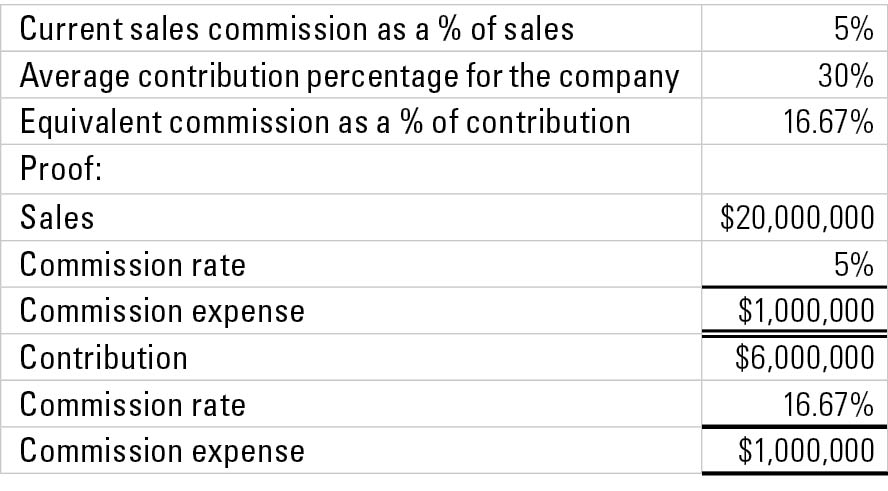
Always deal from strength, especially with your sales force. Your salespeople work for you, and the customers in their portfolios are your customers. Come up with compensation programs that incentivize them to bring in the business that you want. Do the basic marketing and company searches to help them understand where to go and how to get their feet in the door, and make them part of a focused team approach to selling. You also need to measure their performance and track how many calls they are making, how many new items you are getting from their customers, and how many new customers they have brought in. You should also consider whether your compensation program is motivating them to do what is good for the company. Good salespeople are the ultimate game players, and they always figure out what is in their best interests. You need to make sure that your compensation program for them incentivizes them to do what is in your best interest. Many of you have switched to a program of paying them based upon contribution generated by the sale rather than the gross sales dollars to incentivize them to increase the contribution of the order. The table above is how that could work for you.
7. Take Control of Your Data
You are no longer bound by the constraints of your software packages and vendors. The best operators today are moving data from all of their software packages into a platform that integrates the data from all of your departments, including the following, and allows for far greater analytics:
- General ledger and other accounting data
- Cost estimating system data
- Order information
- Machine and other plant data
- Design data
- Delivery information
Custom dashboards can be designed for each manager, and reports can be pushed to them daily. Enhanced analytics can be formulated to help you keep your finger on the pulse of all your key performance indicators in real time, and AI can be utilized to help you analyze the data. The future is here; it is not as expensive as you think it is, and you need to get started on this process immediately.
6. Know Your Costs and Keys to Sustained Profitability
The best of the best excel in understanding the real contribution generated by each and every order and understanding the fixed costs associated with operating their businesses. They create profit centers to understand the profitability of the different lines of business that they are in and cost centers to help their managers manage their departmental costs effectively. This is a much more difficult process if you have not taken steps to take control of your data. But even if you’re just starting that process, you need to separate out manufactured sales from brokered sales, from labor intensive sales to understand the profitability of each category and create departmentalized cost centers. The days of sales and contribution being just one number and all of your expenses being put into selling and general and administrative categories are over, and you need to break your company down into its key profit and cost centers to make sure you are competitive in the marketplace.
5. Initiate Waste Control
No matter what your niche is, materials are going to be the largest expense on your income statement. If materials are 50% of the income statement, then every 1% savings in materials will add 0.5% to your profit percentage. So, if sales are $20 million and materials are $10 million, every 1% savings on materials will add $100,000 to the bottom line.
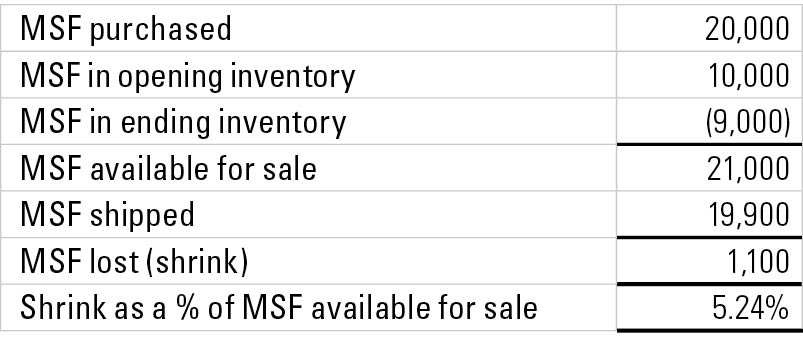
You should start with a simple shrinkage calculation (see table at right).
Track this month by month and see what the trends are, as there may be some cutoff and other reporting issues in any given month, so the year-to-date trend is a better indicator. As to what the number should be, it depends on the complexity of your orders. The more orders you have that go across multiple machines and require lots of ink coverage and/or high graphics, the higher your shrink percentage will be. Get your baseline number and see what the potential for savings is, but if it is 4% or higher, there is probably room for a lot of improvement and savings.
4. Focus on Major Machine Hours and Overall Productivity
The biggest constraint that almost any manufacturing company encounters is the need for more major machine hours. There are only so many hours a day that you can operate, and that limits how many hours are available for producing goods to sell. Therefore, the best operators treat machine hour utilization as the most important statistic in their operations. They are on top of all unplanned downtime, they do everything possible to minimize setup times and improve run speeds, and they measure their machine efficiencies daily. Every order with a significant variance from standard is reviewed. This is an area where extra resources, whether in terms of software, systems, or employees, is generally money well spent.
3. Define and Work Your Niche
The best of the best understand what types of business they have an edge in, and that is what they focus on. They understand their marketplaces and stay in their lanes. They also don’t give product away at lower prices just to bring in business. If you have equipment you know no one in your marketplace can match, then make sure you charge for it. Conversely, don’t chase marginal business just to fill up your machines, under the theory that some contribution dollars are better than no contribution dollars and that you can always raise prices later. The best operators are disciplined, and even if they lose a piece of business to a competitor who offers lower prices, they maintain pricing discipline and are patient. Anyone can cut prices, but if their operations don’t support handling the business they take in efficiently and timely, they will not be able to take care of the customers’ needs long-term.
2. Be Careful With Capital, But Take Calculated Risks
For many converters, even in years when major pieces of equipment aren’t purchased, capital expenses can approach seven figures. So being careful with your limited capital is always part of the equation in this very capital-intensive business. Businesses that exist to fund the lifestyle of their owners generally don’t have staying power, so it all comes down to risk management. If you never invest in your business, it will be difficult for you to be competitive, but if you load yourself up with too much debt, your risk of failing increases dramatically. In my experience, one of the key differences between the most successful converters and everyone else is their tolerance for taking risks. The most profitable companies are always looking for an edge in the marketplace and often buy newer, faster equipment that can increase the quality of their output, and the machine hours available for you to sell can give you that edge. They are also looking for new lines of business, which usually requires a capital outlay. My advice is to always have a five-year plan for capital spending so you can plan for obsolescence of your existing equipment, but every once in a while, you need to roll the dice when something new and exciting comes along. There are lots of complicated methods for making equipment justification calculations, but in my opinion, keep it simple and just calculate the new sales that you need to make the payments on the equipment, while you develop the new business. And remember, the 100% bonus depreciation that is now a permanent part of the tax code can give you a tremendous amount of cash flow in the first year.
1. Consistent Pricing Decisions Made by Senior People
This is probably the least “sexy” item on the list, but the most profitable companies have only their most senior people making pricing decisions and do not try to push these decisions down to others. The notion that customer service, salespeople, and cost estimators should be making these decisions can be disastrous. Pricing decisions must be made by people who understand the production side of the business and understand where you do and don’t have an edge in the marketplace. The old adage that costing is a science and pricing is an art is still true, and you should embrace it. You are not selling a commodity; you are selling important products and valuable services that are not going to be valued the same by everyone, and this needs to be recognized in your pricing decisions. I can’t tell you how many times I have been at a meeting with a company CEO and key executives and had them tell me, “See you in an hour or two. I need to go price some orders.” Most of the time, these companies are at the top end of profitability. Whereas executives that run less profitable companies are often asking how they can get out of the pricing business. Consistent pricing decisions made by senior people is still the top characteristic of the best-in-class converters.

Mitch Klingher is owner of Klingher Nadler LLP. He can be reached at 201-731-3025 or mitch@klinghernadler.com.
