
March 20, 2025
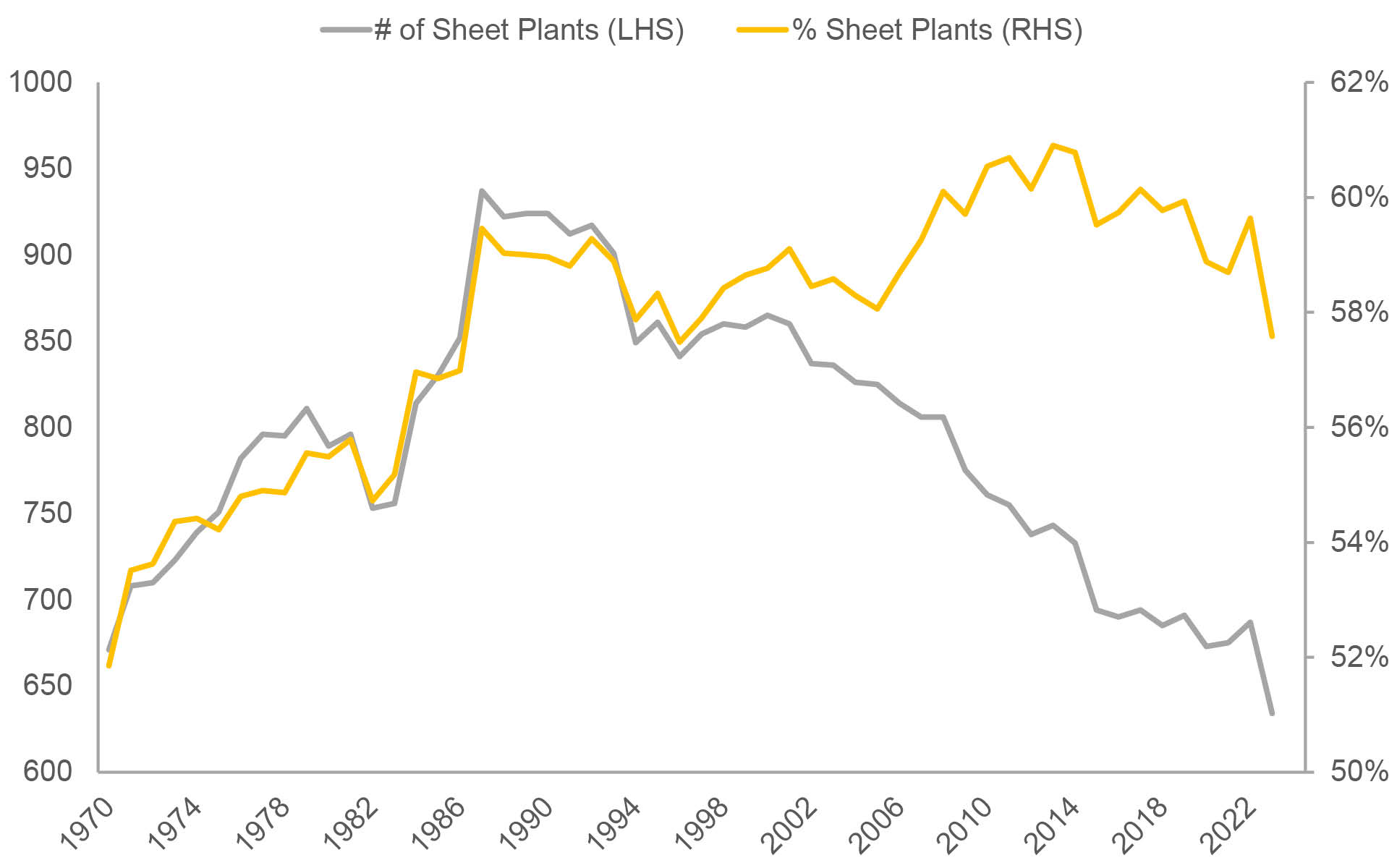
The origins of the first sheet plant are unclear, but Fibre Box Association (FBA) data suggests that by 1940, more than 100 sheet plants were operating. In 1987, The number of sheet plants in the United States peaked at 937 out of 1,576 box plants, according to FBA.
These smaller plants, which lack corrugators, can range widely in size and focus and tend to handle box orders that larger plants can’t or don’t want to run. Very small sheet plants may go through about one truckload of sheets a day (about 150,000 square feet). The largest can reach 3 million to 5 million square feet a day (close to 30 truckloads).
For years, starting a sheet plant was possible with old equipment and little capital. Thanks to used equipment sales, new sheet plants can still enter the market. To be competitive, though, a plant must have machines that can make quality boxes efficiently.
Large sheet plants often boast state-of-the-art equipment—and lots of it. It’s not uncommon to have five to six flexo folder-gluers, six to 10 die cutters, and a host of other converting assets. The biggest sheet plants in the U.S. run 100 million square feet or more a month. We highlighted the industry’s increased investment in new technology in our October 17, 2024, trend report.
Most sheet plants procure their material from sheet feeders, an idea credited to S. Richard Van Horne Sr. The company he founded in 1964 is now known as Corrugated Supplies Co., with nine locations across the U.S.
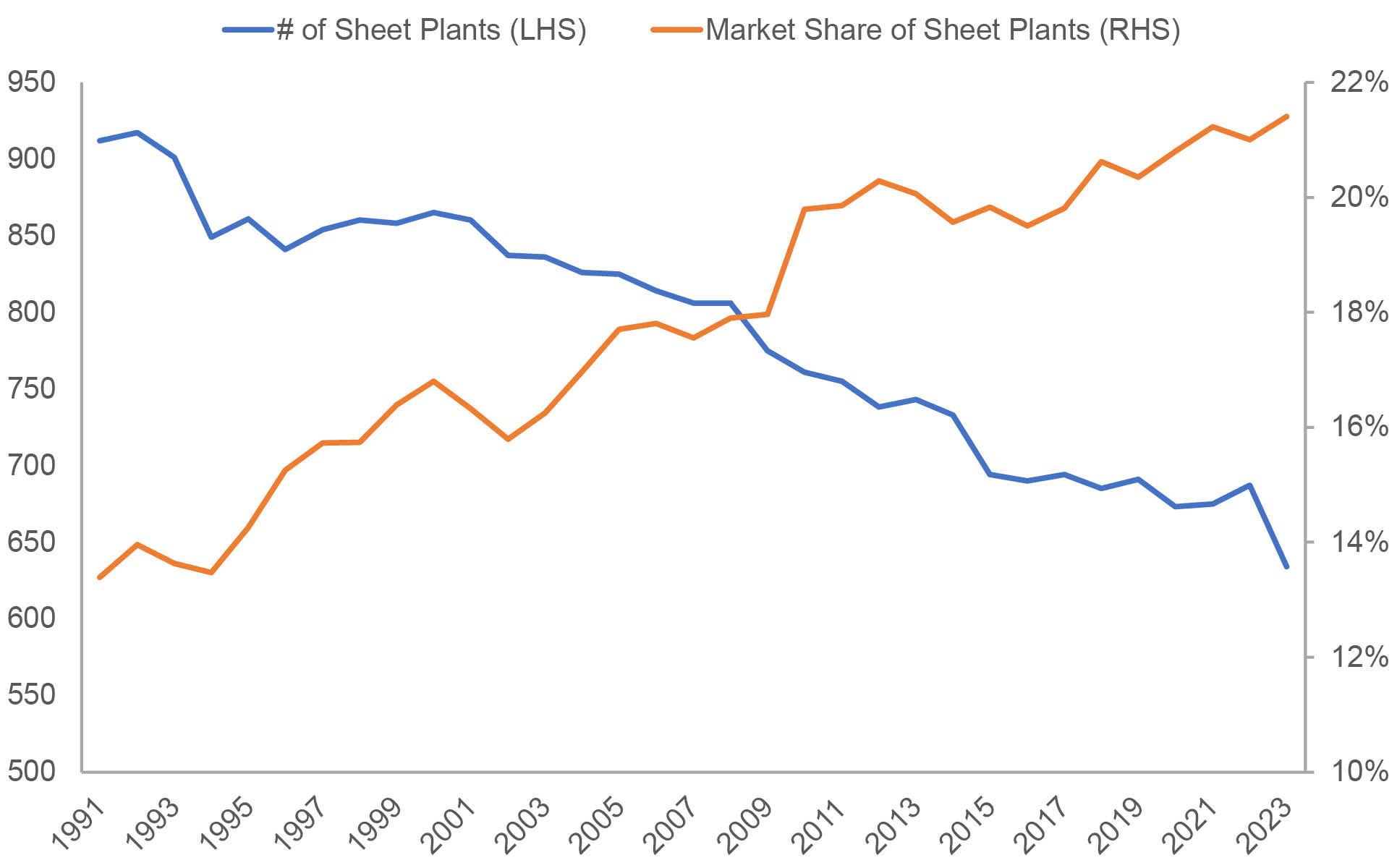
AICC was established 10 years later, when over 50 companies joined together to find a way to survive as independent owners. One of their biggest issues was how to secure a consistent supply of raw materials, both containerboard and sheets. Today, of the 634 sheet plants in operation, 86% belong to independents.

The other 14%, or 88, are owned by four of the top five containerboard producers: International Paper (18), Smurfit Westrock (15), Packaging Corp. (27), and Pratt Industries (28). No. 5, Georgia-Pacific, has no sheet plants. International Paper added five more sheet plants and one more sheet feeder when it acquired DS Smith in the U.S.
Hood Container (14), Schwarz Partners’ TRG (18), and Welch Packaging (18) are among the largest independent sheet-plant operators. Welch is the only one of the three that doesn’t have vertical integration with a mill.
Since 1987, box plants have been closing and consolidating at a steady pace, declining 1% compounded annually. At the same time, sheet plants’ production volume has increased at a compound annual growth rate of 2.1% and now represents almost 22% of box shipments.
Next time, we’ll take a detailed look at sheet feeders and their impact on the industry.

Ryan Fox is a corrugated market analyst at Green Markets, a Bloomberg company.
