Packaging Around the World: Exploring Fiber-Based Solutions Across Cultures and Borders
Packaging Around the World: Exploring Fiber-Based Solutions Across Cultures and Borders
By Anna Ogletree
May 16, 2025
Have you ever wondered if people from other places in the world use the same packaging as in your bubble of the world? Many people assume packaging looks the same everywhere, but it varies significantly by region due to cultural preferences, product types, and economic factors. My passion for packaging stems from a blend of interests: art, science, and a deep curiosity about languages and cultures. In this article, I explore fiber-based packaging from the countries I traveled to or have friends from, highlighting the unique factors shaping each one.
India
Nonwoven Fabric
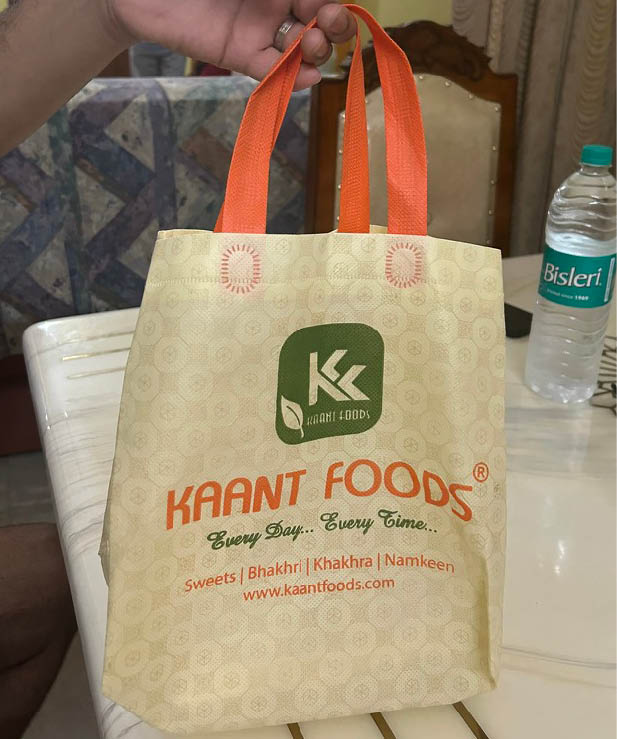
With a population exceeding 1.4 billion, India generates massive amounts of waste. Pollution is a major issue, and efforts such as the widespread use of nonwoven fabric bags, shown bottom left, in place of the typical plastic grocery bag at clothing stores, sweets shops, and grocery stores, are underway to reduce it.
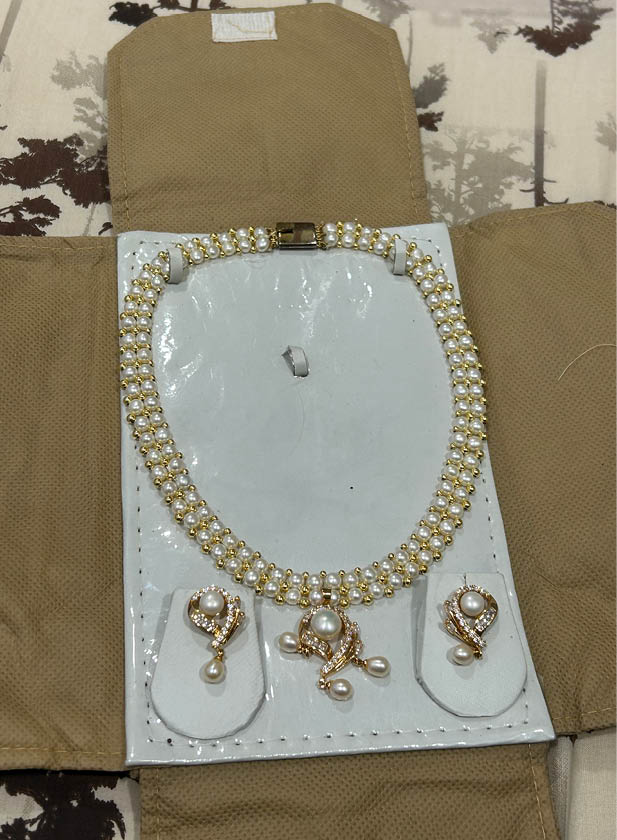
Nonwoven fabric is also used by cultured pearl jewelers to package pearl sets as shown bottom right. The fabric is sewn over a stiff paperboard piece that holds the shape of the case, and four overlapping flaps secure the case with Velcro. Inside, there are usually two flexible hooks containing some sort of foil, allowing them to bend and hold the necklace, a third hook for a maang tikka (a forehead ornament), and two paperboard components with slits for earrings. These fabric-based cases are common for less expensive jewelry; gold, natural pearls, and precious stones are housed in luxurious boxes.
Nonwoven fabric bags offer a more earth-friendly grocery bag.
Bangles
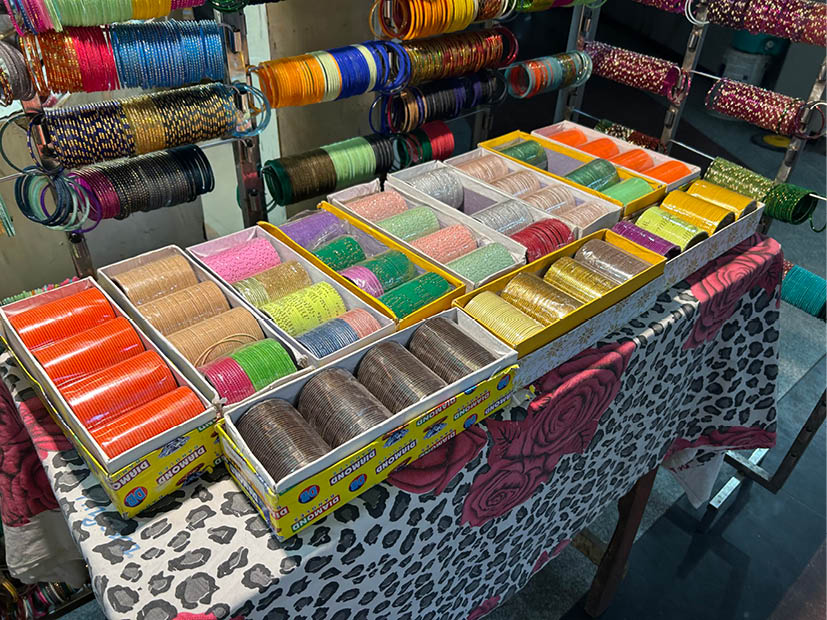
In the U.S., smaller corrugated flute sizes are typically reserved for electronics and fast food, but not so in India. Bangles are often sold in telescopic rigid boxes made of E-flute or F-flute corrugated paperboard or chipboard as shown top right. These boxes, though worn or torn at the edges, protect bangles from bending or breaking. The lid features a thumb notch for easy opening; sets are wrapped in old newspaper clippings before being boxed for the customer. Bangle shops stack these boxes from floor to midceiling and under counters, while street vendors keep extras behind their stalls, ready to hand them to customers trying on bangles.
Bangles, traditional Indian pieces worn on the wrist, are packaged in rigid boxes.Combining nonwoven fabric with stiff paperboard creates a more structured packaging design.
Saris
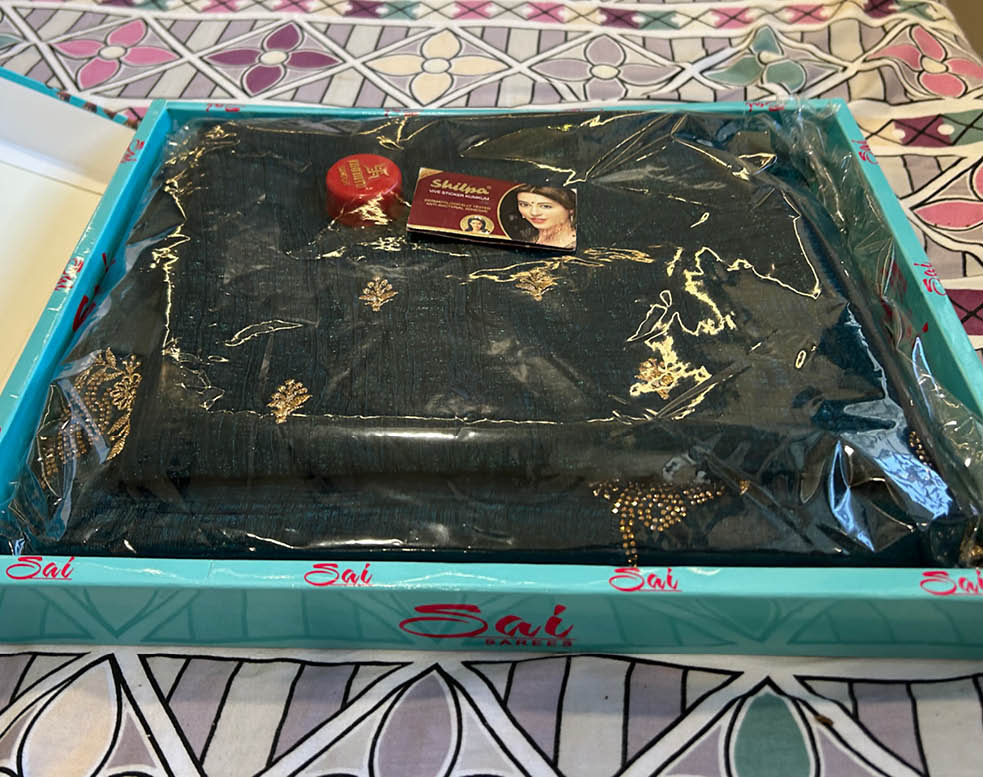
Unlike Western formalwear, which is stored on hangers, saris are folded in a box or a flat, square bag. High-end sari shops package them in elegant reusable gift boxes, enhancing presentation while also being resourceful. Pictured above left is a sari gifted to me, packaged in a two-piece box with premium printing, embossing, and metallic foil stamping. The box has a double-wall folded bottom for an even more enhanced presentation.
This sari box showcases premium print techniques with a double-wall folded bottom.
Sweets
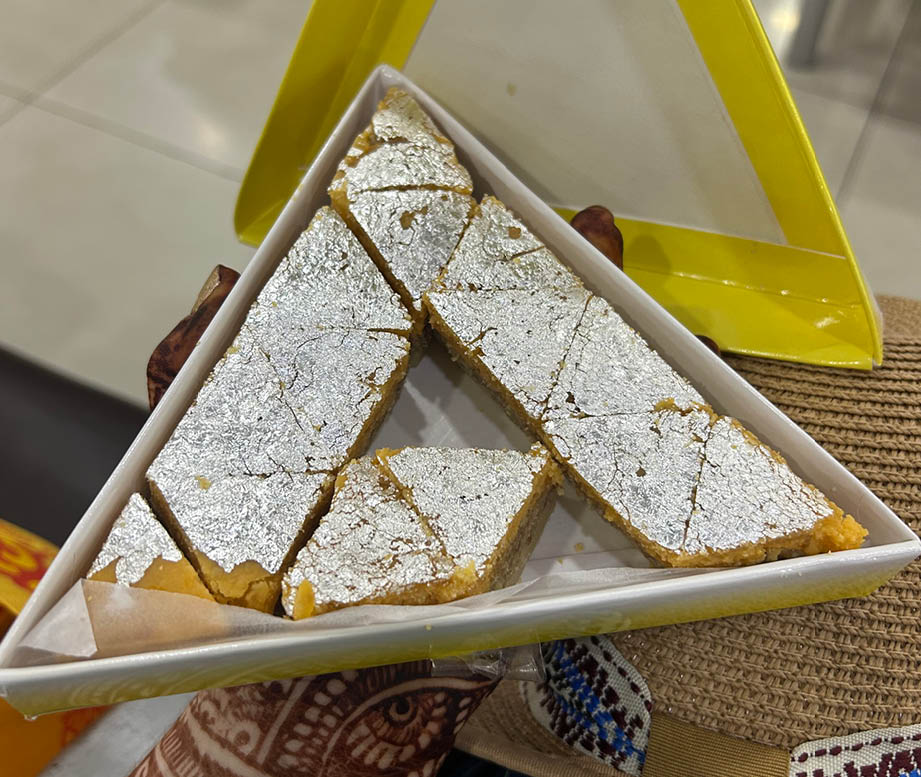
Sweets, or mithai, are often bought or gifted for celebrations such as weddings, job promotions, and housewarmings. Their packaging reflects this, with luxurious designs matching the occasion. Some sweets such as barfi and kaaju katli are cut into triangles, trapezoids, or rhombuses, influencing the shape of their boxes as shown above right.
Indian sweets are commonly housed in custom-shaped packaging.
Sandwiches
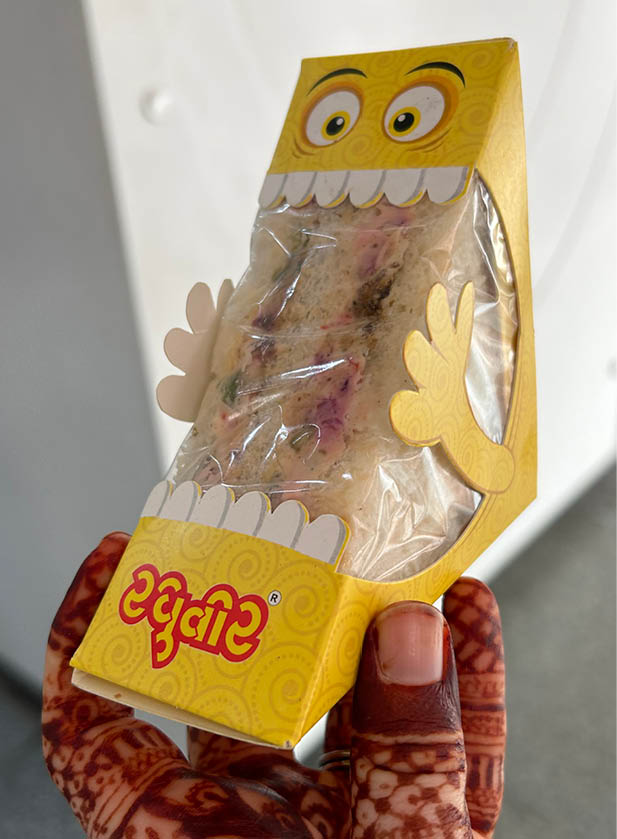
Grocery stores in the United States typically sell deli sandwiches packaged in plastic clamshells, often made of polystyrene or expanded polystyrene. In India, paperboard folding cartons are more common and often feature fun designs such as the triangular package shown to the left.
Folding cartons allow for design flexibility.
Germany
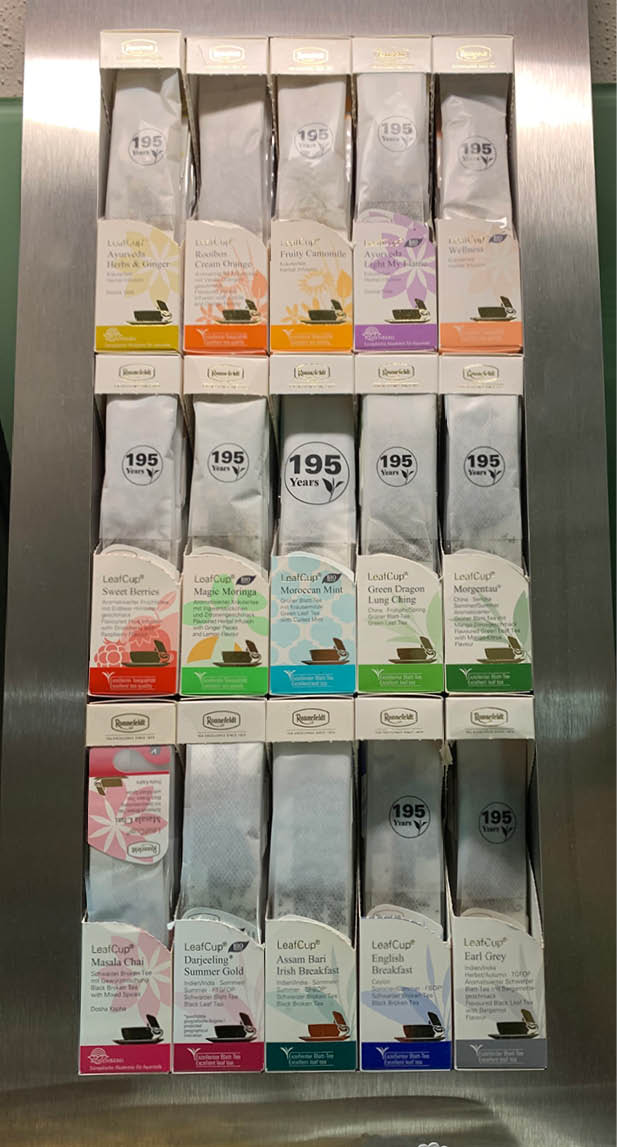
During a trip to Germany, I encountered a tea bag design at my hotel. The tea selection featured various flavors, displayed in cartons featuring a perforated tear-off opening for accessing the individual bags. Instead of the traditional string and tag, these tea bags were secured with a piece of folded cardstock shaped into a hook that latched onto a mug’s rim or handle. The simple but clever design shown below kept the tea bag in place and eliminated the risk of the string slipping into the water.
These German tea bag cartons show off the brand while keeping the individual bags in place.
Iran
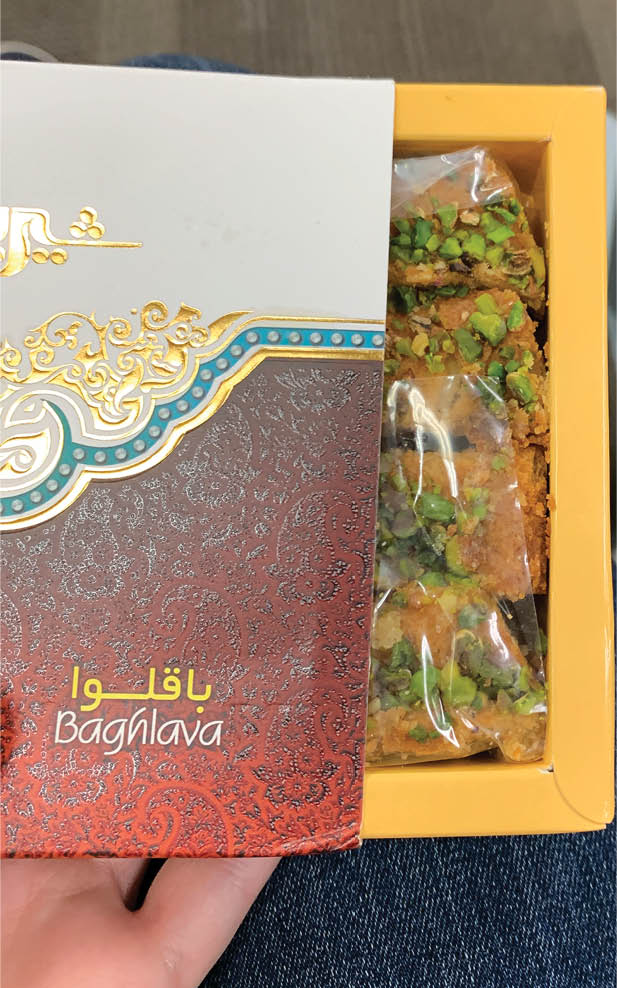
My Iranian friend brought me this box of baghlava—a traditional Middle Eastern and Mediterranean sweet—from Yazd, a city known for its unique confectionaries. Shown at left, the baghlava came in a stunning drawer-style folding carton with a double-wall slide-open tray to hold the pieces. The outer sleeve featured intricate graphics as enticing as the treat inside. The entire box was shrink-wrapped for freshness.
This packaging combines folding carton with a double-wall slide-open tray.
These examples show how fiber-based packaging not only reflects the culture and values of each country but also highlights the practicality of local resources and the availability of materials. Packaging is far more than a means of containment; it is a visual representation of how products are perceived, valued, and used in different parts of the world. Packaging tells a story about the traditions, environmental considerations, and even economic factors that influence design choices. From the materials used to the design and functionality, each packaging solution offers a unique glimpse into the ways products are presented and interacted with globally.